Shutdown Countdown: ICE Negotiations Hit Stalemate as DHS Funding Set to Expire Saturday.
Introduction: A Weekend on the Brink
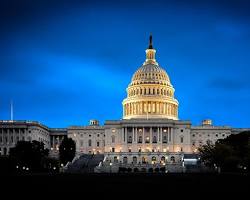
The halls of Congress are filled with tension this Thursday evening as a partial government shutdown looms. With a Friday midnight deadline fast approaching, negotiations over Department of Homeland Security (DHS) funding have hit a “brick wall” over U.S. Immigration and Customs Enforcement (ICE) policies. If a deal is not reached within the next 24 hours, the agency responsible for border security and national safety will face a funding lapse, marking a critical test for the 119th Congress.
The Stalemate: “The Wish List” vs. “The Status Quo”
The conflict centers on a $600 million funding gap and a list of new restrictions on federal immigration agents proposed by the Democratic caucus.
- The Republican Stance: Senate Majority Leader John Thune (R-S.D.) warned Democrats on the Senate floor today that their demands were “unrealistic.” Republicans are pushing for a “clean” funding bill that maintains current operational levels for border security without what they describe as a “radical” policy shift.
- The Democratic Rebuttal: Senate Minority Leader Chuck Schumer and House Minority Leader Hakeem Jeffries remain firm. They argue that funding must include stricter use-of-force policies and an end to certain surveillance practices, especially following the controversial law enforcement actions in Minneapolis last month.
- The Failed Vote: In a high-stakes move today, the Senate failed to advance a DHS funding measure in a 52 to 47 vote, falling short of the 60-vote threshold needed to overcome the Democratic filibuster.
What’s at Stake?
A DHS shutdown doesn’t just affect desks; it hits the front lines of national security:
- Border Operations: While “essential” agents stay on duty, they do so without pay. This historically leads to lower morale and significant processing delays at land crossings.
- TSA & Travel: Airport security screeners must also work without a paycheck. Historically, this has caused a surge in “call-outs,” leading to massive security lines at U.S. airports just as the weekend travel rush begins.
- The Arctic Pivot: Negotiators are also clashing over funding for new northern border initiatives. This follows President Trump’s renewed push for a U.S. strategic presence in the Arctic—often referred to as his “Greenland Moment”—which has placed extra pressure on the DHS maritime budget.
The GCHAM Verdict: Brinkmanship as the New Normal
For Juma’s global audience, this shutdown threat is a clear indicator of the friction within the U.S. government. While President Trump pursues aggressive trade deals abroad, the inability of Washington to fund its own security apparatus highlights a deep internal “rupture.” In 2026, political brinkmanship has evolved from a rare tactic into the standard operating procedure, signaling a period of prolonged domestic instability even as the U.S. projects power on the world stage.