By Brayan Juma — Chief Editor, GCHAM News
Washington, D.C.
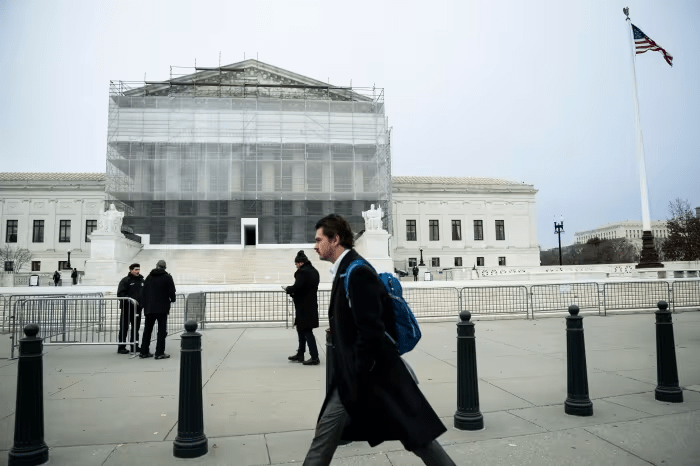
The United States Supreme Court is set to hear oral arguments on Wednesday, January 21, in the closely watched case Trump v. Cook, a legal dispute that could have far-reaching consequences for the independence of the Federal Reserve.
At the center of the case is President Donald Trump’s effort to remove Federal Reserve Governor Lisa Cook before the end of her term. The Court’s decision could clarify — or significantly reshape — the balance of power between the White House and the U.S. central bank.
The Legal Dispute: “For-Cause” Removal Authority
Under the Federal Reserve Act, governors may be removed by the president only “for cause,” a standard traditionally interpreted to protect the central bank from political interference.
The Trump administration argues that it holds constitutional authority to remove executive officials and has cited alleged past compliance issues as justification for Cook’s dismissal. Cook’s legal team, however, contends that the removal attempt violates statutory protections and undermines the Federal Reserve’s long-standing independence.
Legal scholars say the Court’s ruling could either reaffirm the Fed’s institutional safeguards or open the door to broader presidential control over independent agencies.
Why the Case Matters for the U.S. Economy
For more than a century, the Federal Reserve has operated with a degree of separation from day-to-day politics, a structure widely credited with supporting economic stability and market confidence.
If the Court sides with the administration, experts warn it could set a precedent allowing presidents to remove Federal Reserve governors at will, raising concerns about political pressure over interest-rate decisions, inflation control, and financial regulation.
Federal Reserve Leadership in the Spotlight
Federal Reserve Chair Jerome Powell is expected to attend the Supreme Court arguments, an unusual step that underscores the significance of the case for the central bank. While Powell has not commented publicly on the merits of the dispute, his presence signals institutional concern over the potential erosion of the Fed’s autonomy.
Global Attention as Leaders Gather in Davos
The case is unfolding as political and financial leaders convene at the World Economic Forum in Davos. According to diplomats and analysts, questions surrounding U.S. governance, rule-of-law norms, and central bank independence are prominent topics in private discussions, reflecting the international stakes tied to the Court’s eventual decision.
What Comes Next
The Supreme Court is expected to issue its ruling later this year. Until then, Trump v. Cook remains one of the most consequential legal challenges to U.S. economic governance in decades, with implications extending well beyond Washington.

 G-cham