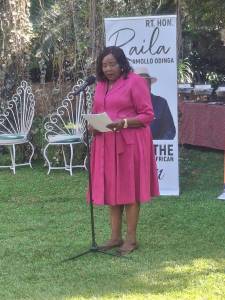
The Orange Democratic Movement (ODM) confronts its gravest crisis since Raila Odinga’s recent passing, marked by bitter factional clashes between Secretary General Edwin Sifuna, Suna East MP Junet Mohammed, and rival leaders pushing for government collaboration. On January 7, 2026—marking what would have been Raila’s 81st birthday—Mama Ida Odinga spoke at the family home in Karen, delivering a poignant appeal for unity and dialogue drawn from her late husband’s legacy. Her intervention seeks to halt escalating expulsions, public spats, and leadership voids threatening ODM’s opposition role ahead of 2027 elections.
This expanded GCHAM.com analysis details her speech, Sifuna’s response, key players like Migori Senator Eddy Oketch, party elder Dr. Oburu Oginga, and the broader strife, underscoring stakes for Kenya’s political landscape.
Post-Raila Power Vacuum Fuels Fractures
Raila Odinga’s death has unleashed ODM’s most severe internal turmoil. Sifuna, aligned with trustees and Oburu, staunchly opposes cozying up to President William Ruto’s broad-based government, vowing fierce resistance against perceived betrayers. Rival factions, eyeing cabinet slots or coalitions, demand his ouster, citing misconduct like unauthorized coalition talks—breaches of ODM’s constitution reserving such powers for the party leader.
Migori Senator Eddy Oketch spearheaded a January 5 petition for Sifuna’s suspension, de-whipping, and expulsion, accusing him of gross indiscipline, damaging public statements on December 30, 2025, and January 3, 2026, and undermining party unity. Oketch alleged Sifuna’s actions warranted automatic resignation under the Political Parties Act. Junet Mohammed, Raila’s longtime ally, has clashed publicly with Sifuna over direction, amplifying post-2022 Azimio tensions where coalition frictions first simmered. These rifts expose deeper woes: selective discipline, marginalization claims from MPs, and grassroots confusion eroding morale.
Ida’s Emotional Birthday Appeal
Addressing mourners, leaders, and media at Karen, Ida channeled Raila’s “firm but fair” ethos: “Baba ran ODM on constant consultations and dialogue, even with his fiercest enemies. Let us ask, what would Baba do? He’d say, sit down and talk about your differences.” She warned that wrangles defile his legacy of reform and unity, urging reflection on ODM’s founding dreams: social justice, democracy, and opposition vigor.
Ida praised ODM’s resilience—“We cannot sell our party!”—and called top leaders to reconcile privately, emphasizing mutual respect and adherence to structures. Her matriarchal stature, honed over decades supporting Raila, lent gravitas, positioning her as interim unifier amid the leadership void.
Sifuna’s Olive Branch and Backers’ Defense
Sifuna swiftly embraced Ida’s plea, declaring at the same event: “As I promised at Mzee’s burial, it will not be me to wreck ODM—it will not be Sifuna. No matter how badly you’ve insulted me, there’s no one in ODM I won’t sit with.” He extended an “olive branch,” pledging talks to end toxicity and reaffirmed commitment to Raila’s ideals.
Oketch withdrew his expulsion motion on January 6, after consulting Oburu, invoking ODM Constitution Article 16(1)(g) for alternative dispute resolution. “In respect to the late Raila’s spirit of dialogue,” his lawyers wrote, shifting from confrontation. Oburu, as party leader, repelled ouster bids, defending Sifuna while stressing free expression as ODM’s DNA. Vihiga ODM branch leaders rallied behind Sifuna, blasting rivals as opportunists.
Junet, though quieter post-speech, represents moderates open to government bridges, highlighting the ideological split: hardline opposition versus pragmatic engagement.
Broader Stakes for ODM and 2027 Elections
These wrangles hobble ODM’s clout as Azimio’s weakened core, diluting scrutiny of Ruto’s administration amid economic woes and youth unrest. Infighting breeds voter apathy, defections to UDA or newer outfits, and disorganized grassroots—critical for 2027’s high-stakes polls where opposition unity could challenge incumbency.
Prolonged chaos risks irrelevance, especially post-party exits from Azimio, turning ODM into a Luo-centric shell rather than national force. Morale plummets as MPs defy lines, donors hesitate, and public perception sours: from reform vanguard to squabbling relic.
Roadmap: Elders, Dialogue, and Renewal
Ida’s blueprint—mirroring Raila’s—prioritizes inclusive forums under Oburu to air grievances, transparent nominations, even-handed discipline sans purges, and refocus on ideology: equity, devolution, anti-corruption. Empowering organs like the Central Committee prevents one-man rule.
Sifuna’s vow signals buy-in, but success demands follow-through: scheduled talks, binding resolutions, and youth involvement to bridge generations. Fair processes rebuild trust; selective vendettas deepen rifts. Reviving Raila’s consultation model could reposition ODM as democratic beacon, primed for coalitions or solo runs.
Legacy on the Line
Ida Odinga’s January 7 appeal tests ODM’s soul. Heeding dialogue honors Raila, fortifies resilience.
With 2027 looming, unity isn’t sentiment—it’s survival. A healed ODM could reclaim opposition mantle; division spells marginalization in Kenya’s evolving arena.

 G-cham